

Pregnancy after loss can be a bittersweet and emotionally complex experience. For many parents who have experienced a previous pregnancy or baby loss, the focus may shift from getting pregnant to staying pregnant.
You may experience grief, fear, hope, excitement, anxiety, and uncertainty—sometimes all at once. While everyone's experience is different, there are ways to support yourself throughout this journey.
You do not have to navigate this challenging experience alone.
We hope you find ways to allow yourself to continue feeling the grief of your loss while also making room for whatever feelings arise during this pregnancy. Grief and joy can exist at the same time.
Making Room for Complicated Emotions
There is no right or wrong way to feel during pregnancy after loss.
Some common feelings include:
Disbelief or doubt
Fear and worry
Hope and excitement
Guilt or regret
Joy and relief
Sadness or emptiness
Difficulty trusting that things will be okay
These emotions may change throughout your pregnancy. You may feel hopeful one day and overwhelmed the next.
What can be helpful:
Accept that pregnancy after loss can be hard.
Give yourself compassion and grace throughout your journey.
Allow yourself to celebrate or not celebrate this pregnancy.
Take time to grieve your previous loss(es), even while pregnant.
Know that no future baby replaces or makes up for the one(s) you have lost.
Remember that it's okay to still think about and feel sadness about your prior loss(es).
Honor the complex and sometimes conflicting feelings that may come up.
Take it one day, one moment, or even one breath at a time.
Every pregnancy and every baby is different. You do not need to feel a certain way or reach particular emotional milestones.
Caring for Your Mental Health
Many parents who are pregnant after loss experience additional mental and emotional challenges.
Some experiences may include:
Feeling stressed or on edge much of the time.
Living with persistent fear or worry.
Experiencing symptoms of anxiety, depression, or post-traumatic stress.
Finding it difficult to feel connected to the pregnancy or bond with the baby.
Feeling overwhelmed by appointments, milestones, or uncertainty about the future.
These experiences do not mean you are doing anything wrong.
Ways to support your emotional well-being:
Learn about the mental, physical, and emotional challenges that can arise during pregnancy after loss.
Recognize how your previous loss may affect your feelings and decisions during this pregnancy.
Make time for self-care in ways that feel manageable.
Focus on what is within your control while acknowledging that some things are not.
Consider seeking support from a mental health professional familiar with pregnancy after loss.
Connect with other parents who understand the experience.
You deserve compassionate mental health support during pregnancy and after birth.
Communicating With Your Healthcare Team
Pregnancy after loss may change how you experience prenatal appointments, ultrasounds, testing, and medical decisions.
You may need additional reassurance, information, or opportunities to ask questions.
What can be helpful:
Find a medical provider who respects and listens to your needs.
Speak up for yourself and your baby with your medical care team.
Share information about your previous loss and how it may affect your experience of this pregnancy.
Be clear and specific about the kind of help, support, and information you need.
Ask questions and request clarification when something is difficult to understand.
Discuss your preferences, concerns, and hopes for birth as your pregnancy progresses.
Your experiences and concerns deserve to be heard and taken seriously.
Finding Support From Others
You may find that people around you don't fully understand the emotions that come with pregnancy after loss.
Some may expect you to feel happy or reassured, while others may not know what to say.
Ways to find support include:
Building a support system that may include family, friends, other pregnancy after loss parents, and mental health providers.
Being clear about the kind of support or advice you want from others.
Setting boundaries around conversations or questions that feel overwhelming.
Declining invitations to celebrations or events that may be difficult.
Connecting with other parents navigating pregnancy after loss.
Joining an RTZ HOPE virtual Pregnancy After Loss Support Group.
You do not have to explain or justify your feelings to everyone around you.
Preparing for Birth After Loss
As your pregnancy progresses, you may begin thinking about labor, delivery, and meeting your baby.
For some parents, this brings excitement and anticipation. For others, it may also bring fear, memories of a previous loss, or uncertainty.
Some things to consider:
Talk with your healthcare team about your previous experiences and any concerns about birth.
Plan the birth experience you hope for while allowing room for changes.
Discuss what might help you feel supported during labor and delivery.
Identify people you would like to have involved in your care.
Consider ways to communicate your pregnancy and loss history to hospital staff.
Finding Additional Support and Resources
RTZ Pregnancy After Loss Support Groups
RTZ offers virtual Pregnancy After Loss Support Groups where parents can connect with others navigating a subsequent pregnancy.
These groups provide information, resources, and a shared community experience to support you throughout the complex journey of pregnancy after loss.
Pregnancy After Loss Clinics
Some healthcare systems offer specialized Pregnancy After Loss Clinics that provide enhanced clinical care and psychological support during subsequent pregnancies.
You can find a PAL Clinic at USPAL Network.
One Day at a Time
Pregnancy after loss is not about leaving your previous baby behind or finding a way to stop grieving.
You can carry love and grief for the baby who died while making room for this pregnancy and the baby you are expecting.
You may feel hopeful, afraid, connected, uncertain, or many things at once.
There is no perfect way to navigate pregnancy after loss. Give yourself compassion and grace throughout your journey, and remember that you do not have to do this alone.
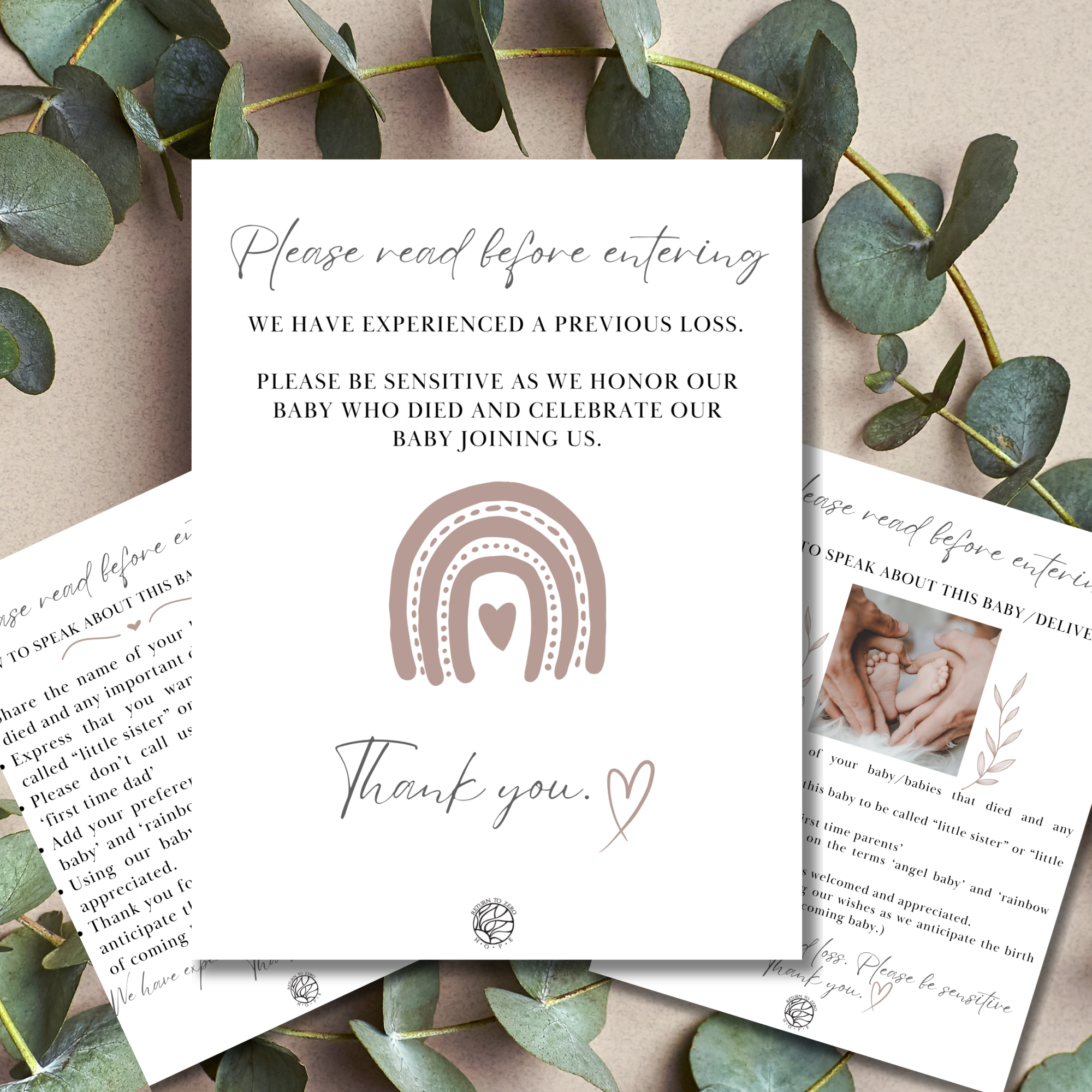
Pregnancy After Loss Door Signs
Going to appointments during pregnancy after loss can bring a mix of emotions, and it isn't always easy to explain your history or what you need from your care team.
We've created three customizable door signs that can help communicate that you are pregnant after loss and offer gentle guidance to the people caring for you.
Choose the design that feels right for you, personalize it in Canva, and download or print it to bring with you to appointments or use during a hospital stay.
The templates are free to use. A free Canva account is required to customize them.
Get the Free Door Sign Templates
Enter your name and email below for immediate access to all three customizable Canva templates.